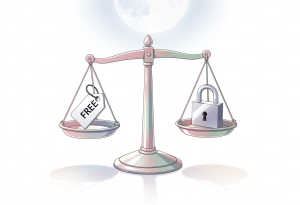
You may fear crossing a red line by exploring your digital fantasies, legitimately wondering whether hentai game legality actually protects you from potential legal trouble. The answer requires nuance, because the boundary between perfectly authorised erotic entertainment and strictly prohibited content rests on visual and contextual details that every informed player must master. We break down the grey areas of the law and give you the essential safety habits to enjoy your passion with peace of mind, without ever compromising your security or legal standing.
The answer isn’t straightforward: legality with conditions
Adult hentai games: the general principle
In principle, enjoying a title featuring adult, consenting characters is completely legal if you are of age. It is ultimately comparable to watching a standard adult film. You have the right to entertain yourself. The law does not ban the genre itself.
What the law cares about is the content displayed, not the artistic technique. Whether the scene is in realistic 3D or anime style makes no difference. The manga aesthetic offers no special legal loophole.
The world of online hentai games is vast, ranging from narrative visual novels to complex RPGs. Quality varies widely between studios. This diversity sometimes blurs the lines around hentai game legality. The term actually covers a thousand different realities.
The red line you must never cross: depiction of minors
I will be brutally honest: any depiction of minors in a sexual context is strictly illegal. It does not matter whether it involves drawings, 3D renders, or AI-generated images. This is the absolute limit. Do not play with that.
Laws in most countries treat such virtual content the same as real illegal material. Mere possession, downloading, or viewing can expose you to severe criminal penalties. You risk your freedom over a file. Courts show zero tolerance.
The “fictional” appearance or graphic style like “lolicon” is not a legally valid excuse before a court. The law does not care that the character does not actually exist. If it looks like a minor, it is punishable.
Other areas of legal concern
The question of violent or extreme content
Beyond minors, some countries draw a strict red line on violence. Even between fictional adults, hentai game legality collapses if the content veers into extreme pornography. This is a legal reality often overlooked by players.
Think you are safe with adult characters? Not so fast. The law can crack down when content crosses into the unacceptable. Here are the red lines commonly drawn by legislators:
- Realistic or simulated acts of torture
- Scenes of degrading humiliation
- Depictions involving animals
The boundary sometimes remains unclear, but the presence of these elements carries significant legal risk.
Streaming vs downloading: a crucial difference
This is a technical nuance that changes everything in court. Streaming, by nature, does not permanently store anything on your machine. You watch a temporary stream, which leaves far fewer direct material traces compared to a file saved on your disk.
Downloading and possessing illicit files, on the other hand, is a different matter. It is a clearly defined offence, much easier for authorities to prove during a seizure. This act materialises possession and considerably increases the criminal risk for the user.
Your country of residence always takes precedence
Many make the mistake of thinking that if something is sold in Japan, it is allowed everywhere. That is wrong. Your geographical location determines the rules, not the developer’s country of origin.
A title can be freely available in Tokyo and land you in court in your home country. If content violates local laws, consuming it remains totally illegal where you live. Your local law applies — and either protects you or penalises you.
How to play safely and legally
Spotting a game’s warning signs
Learning to spot red flags will save you a lot of trouble. The first clue is always character appearance: if their age seems ambiguous or they wear school uniforms in a questionable context, walk away. Caution should dictate every click when facing these uncertainties.
Other signals, like extreme violence, should alert you immediately. The law does not joke about protecting minors, even fictional ones. Ignoring these details can turn a simple game into a serious offence. Here is a summary to visualise the legal risks clearly.
| Content type | Legal status |
|---|---|
| Adult characters | Legal |
| Minor-looking characters (lolicon/shotacon) | Strictly illegal (criminal offence) |
| Extreme/degrading violence | High legal risk / Illegal |
Choosing reliable platforms and games
Turn to established platforms like Nutaku or Erogames that moderate their catalogue. These sites display clear terms of use and enforce strict age verification. This is an essential mark of seriousness for gaming with peace of mind and ensuring your online safety.
Never skip community reviews before downloading. To save time, our guide to the best hentai games remains a reliable reference. You will find titles that respect hentai game legality while guaranteeing a quality experience free from nasty surprises.
Ultimately, your common sense is your best ally in this universe. Never let curiosity override basic safety. Simply keep these three habits in mind:
- Check the apparent age of characters
- Read the descriptions and tags
- Stick to known sites and publishers
The legality of hentai games rests above all on your vigilance. If you choose works featuring consenting adults and avoid any depiction of minors or extreme violence, you stay within the law. Use common sense and pick reliable platforms to explore your fantasies with complete peace of mind.
Frequently Asked Questions
Is it legal to play hentai games?
Generally speaking, yes — under one strict condition: the content. As long as the game features adult, consenting characters, it is considered a standard pornographic work, perfectly legal for an adult audience. The law authorises consumption of this content, whether filmed or drawn.
Does the “cartoon” or fictional aspect protect you if the game contains minors?
No, and this is a point I must be very firm about. Laws in most countries strictly prohibit any pornographic depiction of minors, even if they are drawings, CGI, or AI-generated. The “fiction” argument has no legal value: if the character looks like a child, possession or viewing of the work is a serious offence.
What is the difference in risk between streaming and downloading?
The distinction is technical but important for your legal safety. Downloading means you save the file to your device, which constitutes material evidence of possession. If the content turns out to be illegal, penalties are much heavier and easier to enforce than with simple streaming, which only leaves temporary traces.
If a game is authorised in Japan, is it automatically legal here?
This is a common misconception, but the answer is no. It is always the law of your country of residence that takes precedence. A game can be freely available in Japan but contain elements (such as extreme violence or child-like characters) that make it illegal where you live. Do not rely on the game’s origin — only your local legislation matters.
How do you choose a hentai game without taking risks?
My friendly advice is to always prioritise caution and common sense. Turn to reliable, well-known platforms that moderate their catalogue. If you have the slightest doubt about the apparent age of characters or the violence of scenes, do not take unnecessary risks. There are plenty of quality, perfectly legal titles to enjoy with complete peace of mind.